
By: Andrew Lawson
If Part One explained why VIOME stands out, this is where the experience becomes tangible.
Because even the most advanced testing platform depends on execution. If onboarding is unclear, if sample collection is inconsistent, or if return logistics introduce friction, the quality of the data can be compromised before analysis even begins.
VIOME approaches this differently.
Simple, Structured Onboarding
The onboarding process is designed to be direct and low friction.
After receiving the kit, the steps follow a clear sequence:
• Register the kit online
• Follow guided sample collection instructions
• Complete the health questionnaire
• Return the samples using prepaid packaging
• Track progress through the platform
The interface is clean and functional. Each step is clearly defined, which reduces user error and improves consistency across samples.
This matters in RNA-based testing, where variability in collection can directly impact downstream results.
Kit Quality and Design
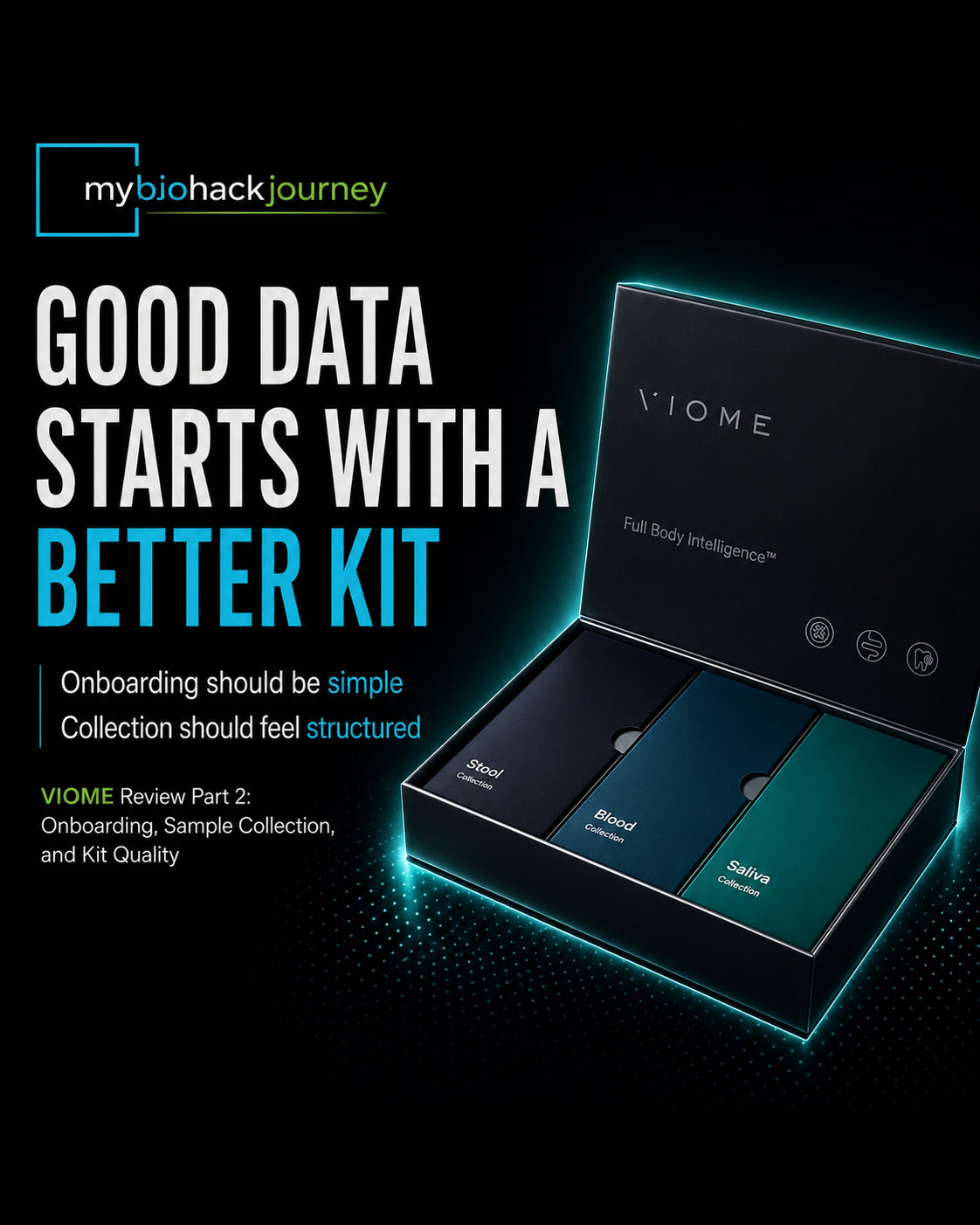
The first noticeable detail is the build quality of the kit itself.
This is not generic packaging. It reflects a structured, clinical-grade approach to at-home testing.
Inside the kit:
• Individually labeled collection components
• Stabilization solutions designed to preserve RNA integrity
• Secure containers to prevent leakage or contamination
• Organized packaging that guides the workflow
The layout is intentional. Each component is placed in a way that mirrors the order of use, minimizing confusion and ensuring correct handling.
This level of design reduces friction while also protecting sample integrity.
Sample Collection Process
At-home microbiome testing is inherently sensitive, but VIOME simplifies the process effectively.
Instructions are clear, sequential, and easy to follow. Each sample type is handled with specific guidance to ensure consistency.
Key details include:
• Use of preservation media to stabilize biological material
• Clear sealing and mixing instructions
• Separation of samples to avoid cross-contamination
The process is efficient and can be completed without clinical supervision. There is no need for appointments or lab visits, which significantly improves accessibility.
Return and Logistics
The return process is streamlined.
Once samples are collected:
• Each sample is sealed in protective packaging
• All materials are placed into a prepaid return envelope
• The package can be dropped into a standard mailbox
There are no additional steps or costs.
Samples are stabilized for transit, which allows for flexibility in timing without compromising viability.
Tracking is integrated into the platform, providing visibility from shipment to lab receipt. This reduces uncertainty and reinforces confidence in the process.
What the Execution Signals
In this category, execution is often overlooked.
However, consistency in onboarding, collection, and logistics is essential for reliable results. Small breakdowns in process can introduce variability that affects interpretation.
VIOME’s approach indicates a focus on:
• Standardization of sample handling
• Reduction of user error
• Preservation of biological integrity
• Scalable, repeatable workflows
These factors are critical for longitudinal testing, where consistency across multiple time points is required.
Why This Matters
For anyone building a data-driven health baseline, repeatability is essential.
The process must be:
• Easy to follow multiple times
• Consistent across collections
• Resistant to user error
VIOME’s system is designed with these constraints in mind.
This positions it not just as a single test, but as part of a broader measurement framework.
What Comes Next
Part Three will focus on what happens after the samples reach the lab.
Specifically:
• How RNA sequencing is used to analyze biological activity
• How VIOME translates raw data into recommendations
• What differentiates its outputs from traditional biomarker testing
• Where the strengths and limitations exist
This is where the scientific and practical value of the platform becomes clearer